
Autism Spectrum Disorder
“Understanding your child's unique world.”
Understanding Autism
Autism Spectrum Disorder (ASD) is a neurodevelopmental condition that affects how a person communicates, interacts with others, and experiences the world. It is called a 'spectrum' because every child with autism is unique — some may need minimal support while others require more intensive help. At Devine CDC, we see autism not as something to 'fix' but as a different way of experiencing life that deserves understanding, respect, and the right kind of support.
Children with autism often experience the world more intensely. Sounds may seem louder, lights brighter, and social situations more confusing. They may communicate differently — through actions rather than words, or with a unique way of using language. Many children with autism have incredible strengths: exceptional memory, deep focus on interests, creative thinking, and an honest, genuine way of connecting with others. Our role is to help them use these strengths while building the skills they need for daily life.
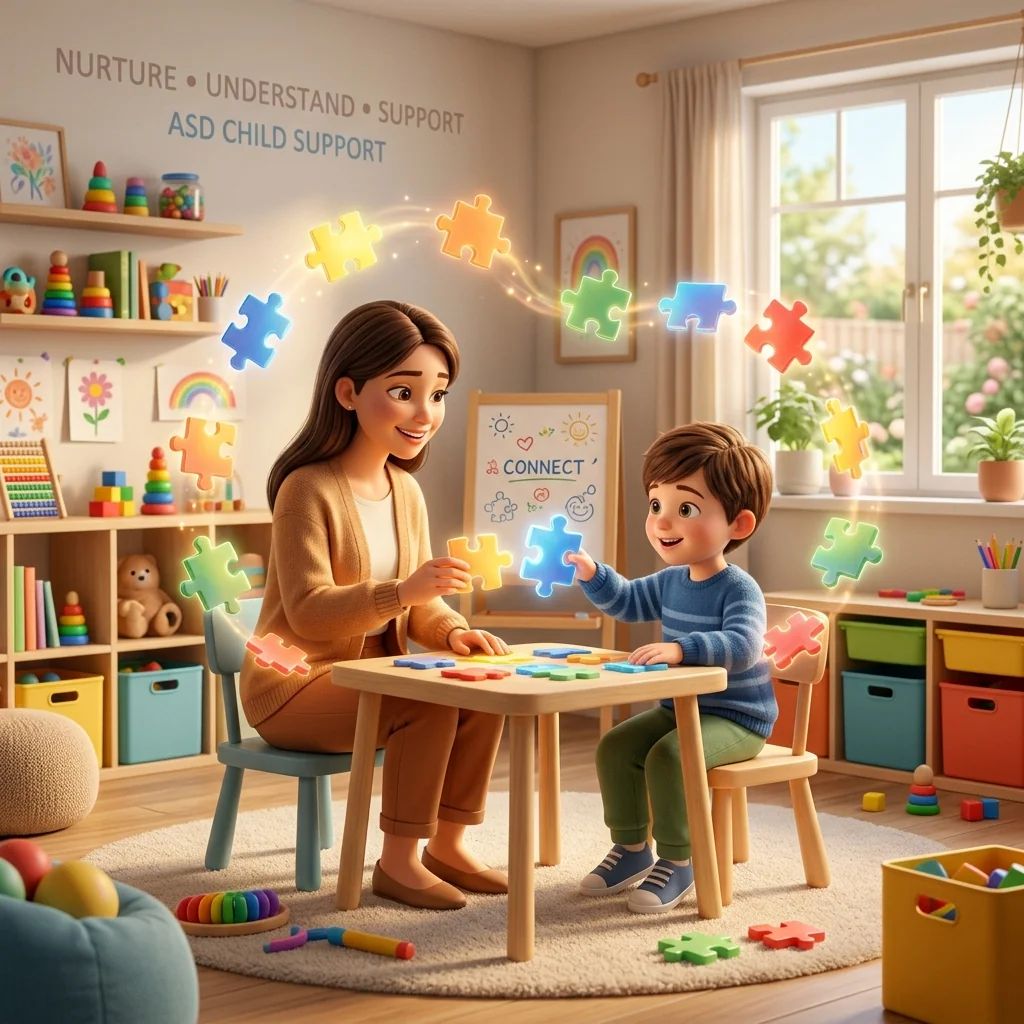
Signs to Watch For
Social Communication
- Limited or no eye contact
- Doesn't respond to their name by 12 months
- Doesn't point or wave by 12 months
- Prefers playing alone rather than with others
- Difficulty understanding or expressing emotions
- Doesn't engage in pretend play by 18 months
Repetitive Behaviours & Interests
- Lining up toys or objects in a specific order
- Repeating words, phrases, or sounds (echolalia)
- Hand-flapping, spinning, or rocking
- Intense focus on specific topics or objects
- Distress with small changes in routine
- Unusual sensory responses (covering ears, avoiding textures)
Daily Living
- Difficulty with transitions between activities
- Selective eating (limited food preferences)
- Sleep difficulties
- Challenges with self-care tasks (dressing, grooming)
How We Help at Devine CDC
Early Intervention Programmes
Our structured early intervention programmes for children aged 2-6 combine ABA, speech therapy, and OT into an intensive yet play-based schedule that maximises developmental gains during the most critical years.
Communication Building
Whether through verbal speech, sign language, picture exchange systems (PECS), or communication devices — we ensure every child has a reliable way to express themselves.
Social Skills Training
Through structured group activities and one-on-one coaching, we teach children how to read social cues, take turns, share, and build friendships.
Sensory Integration Support
Our sensory-rich therapy environment helps children learn to process and respond to sensory input in a regulated way, reducing meltdowns and increasing comfort.
Behaviour Support
We identify the function behind challenging behaviours and teach children appropriate alternatives — transforming frustration into communication.
Family-Centred Approach
We provide comprehensive parent training, sibling support, and home strategies so your entire family feels equipped and empowered.
Therapies We Use for Autism
ABA Therapy
Primary intervention for building communication, social, and daily living skills through positive reinforcement.
Speech & Language Therapy
Addresses speech delays, language comprehension, and social communication challenges.
Occupational Therapy
Supports sensory processing, fine motor skills, and self-care independence.
Special Education
Provides tailored academic instruction adapted to the child's learning style.
Myths vs. Facts
✕ Myth
Autism is caused by bad parenting.
✓ Fact
Autism is a neurodevelopmental condition with a strong genetic basis. It has nothing to do with parenting style, diet, or lifestyle choices.
✕ Myth
Children with autism can't feel emotions.
✓ Fact
Children with autism feel emotions deeply. They may express them differently, but they experience the full range of human feelings — love, joy, frustration, and empathy.
✕ Myth
If a child can speak, they don't have autism.
✓ Fact
Many children with autism are highly verbal. Autism affects communication in varied ways — some children struggle with speech, while others have difficulty with the social use of language.
✕ Myth
Children will 'outgrow' autism.
✓ Fact
Autism is a lifelong condition. However, with the right support, children can develop significant skills and lead fulfilling, independent lives.
Frequently Asked Questions
At what age can autism be diagnosed?
Reliable diagnosis is possible from 18-24 months, though many children are diagnosed later. If you notice signs, don't wait — early assessment allows for earlier intervention, which leads to better outcomes.
What causes autism?
The exact cause is not fully understood, but research points to a combination of genetic and environmental factors. It is NOT caused by vaccines, parenting style, or anything the parents did or didn't do.
Can my child attend a regular school?
Many children with autism attend mainstream schools with appropriate support (shadow teachers, accommodations). The right school depends on your child's individual needs and abilities.
How long will my child need therapy?
This varies greatly. Some children make rapid progress and need less support over time, while others benefit from ongoing therapy. We regularly review goals and adjust the plan as your child grows.
A Message for Parents
“Receiving an autism diagnosis for your child can bring a whirlwind of emotions — and that's completely normal. But know this: your child is still the same wonderful person they were before the diagnosis. They just have a name for why certain things are harder. At Devine CDC, we are here to walk this journey with you — with expertise, empathy, and unwavering belief in your child's potential.”
— The Devine CDC Team
We're here to help
If you have concerns about your child or they have been diagnosed with Autism, getting support early can make a significant difference.