
ADHD
“Channelling energy into extraordinary potential.”
Understanding ADHD
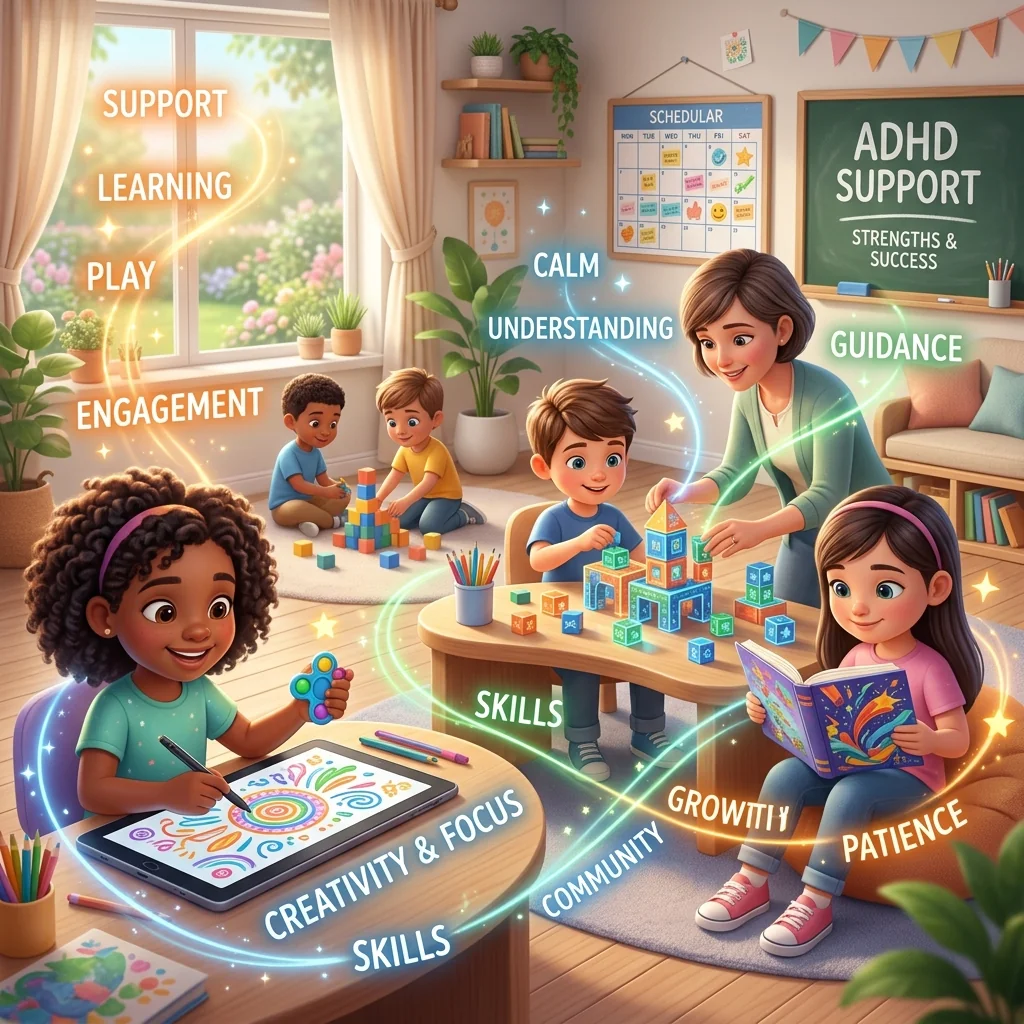
Attention Deficit Hyperactivity Disorder (ADHD) is a neurodevelopmental condition that affects a child's ability to focus, control impulses, and regulate their activity level. It's not about being naughty or lazy — children with ADHD have brains that are wired differently, often leading to incredible creativity, energy, and out-of-the-box thinking alongside the challenges.
ADHD shows up differently in every child. Some children are primarily inattentive — dreamy, forgetful, and easily distracted. Others are primarily hyperactive-impulsive — always on the move, talking non-stop, and acting before thinking. Many children have a combination of both. Understanding which pattern your child follows is key to providing the right support. At Devine CDC, we don't just manage symptoms — we help children harness their ADHD traits as strengths.
Signs to Watch For
Inattention
- Difficulty sustaining attention during tasks or play
- Doesn't seem to listen when spoken to directly
- Frequently loses belongings (toys, books, school supplies)
- Avoids tasks requiring sustained mental effort
- Easily distracted by unrelated thoughts or stimuli
- Often forgetful in daily activities
Hyperactivity
- Fidgets, squirms, or can't stay seated
- Runs or climbs in inappropriate situations
- Talks excessively
- Difficulty playing quietly
- Seems 'driven by a motor' — always on the go
Impulsivity
- Blurts out answers before questions are finished
- Difficulty waiting for their turn
- Interrupts or intrudes on others
- Acts without thinking about consequences
- Makes hasty decisions
How We Help at Devine CDC
Behavioural Strategies
We teach children concrete strategies for impulse control, emotional regulation, and self-monitoring through structured behavioural interventions.
Executive Function Training
Our programmes build the 'CEO skills' of the brain — planning, organising, prioritising, time management, and working memory.
Attention Building Activities
Through carefully graded activities, we gradually increase your child's ability to sustain focus, filter distractions, and complete tasks.
Social Skills Coaching
Many children with ADHD struggle with friendships due to impulsivity. We teach waiting, listening, and reading social situations.
Academic Support
Our special educators provide strategies for homework management, study skills, and classroom behaviour that set children up for school success.
Parent Coaching
We equip parents with evidence-based strategies for managing ADHD at home — from morning routines to homework battles — reducing stress for the whole family.
Therapies We Use for ADHD
ABA Therapy
Teaches self-regulation, impulse control, and appropriate behavioural responses through positive reinforcement.
Occupational Therapy
Addresses sensory processing issues, motor restlessness, and builds attention through sensory integration activities.
Special Education
Provides academic strategies, organisational skills training, and study techniques adapted for ADHD learners.
Speech & Language Therapy
Supports pragmatic language skills — turn-taking in conversation, listening, and organised verbal expression.
Myths vs. Facts
✕ Myth
ADHD isn't real — it's just bad behaviour.
✓ Fact
ADHD is a well-documented neurological condition with differences visible on brain imaging. It is recognised by every major medical organisation worldwide.
✕ Myth
Only boys get ADHD.
✓ Fact
Girls get ADHD too, but they are often underdiagnosed because they tend to show more inattentive symptoms rather than hyperactive ones.
✕ Myth
Children with ADHD can never focus.
✓ Fact
Children with ADHD can often 'hyperfocus' on activities they find interesting. The challenge is directing attention to tasks that are less stimulating.
✕ Myth
ADHD is caused by too much sugar or screen time.
✓ Fact
ADHD has a strong genetic component. While sugar and screens can affect behaviour in all children, they do not cause ADHD.
Frequently Asked Questions
When is ADHD typically diagnosed?
ADHD can be diagnosed from around age 4-5, though it's often identified when children start school and the demands for sustained attention increase. Some children aren't diagnosed until later childhood or even adolescence.
Does my child need medication for ADHD?
Medication is one option but not the only one. Many children benefit significantly from behavioural therapy, skills training, and environmental modifications alone. We can discuss all options and help you make an informed decision in collaboration with your paediatrician.
Will my child outgrow ADHD?
About one-third of children with ADHD see significant improvement in adolescence. However, many carry some symptoms into adulthood. The skills learned in therapy serve them throughout life.
How can I help my child at home?
Establish consistent routines, break tasks into small steps, use visual schedules and timers, offer specific praise for effort, create a calm homework space, and build in plenty of physical activity breaks.
A Message for Parents
“Parenting a child with ADHD can be exhausting — but it can also be incredibly rewarding. Your child's energy, creativity, and unique way of seeing the world are gifts. At Devine CDC, we help you see past the challenges to the extraordinary child underneath — and we give both of you the tools to thrive.”
— The Devine CDC Team
We're here to help
If you have concerns about your child or they have been diagnosed with ADHD, getting support early can make a significant difference.